Loading...

Heat Pumps & Air Conditioners Buyer's Guide

Are you looking for a new heat pump or AC system?

We'll help you explore your options so you can enjoy year-round comfort while saving on your power bill.

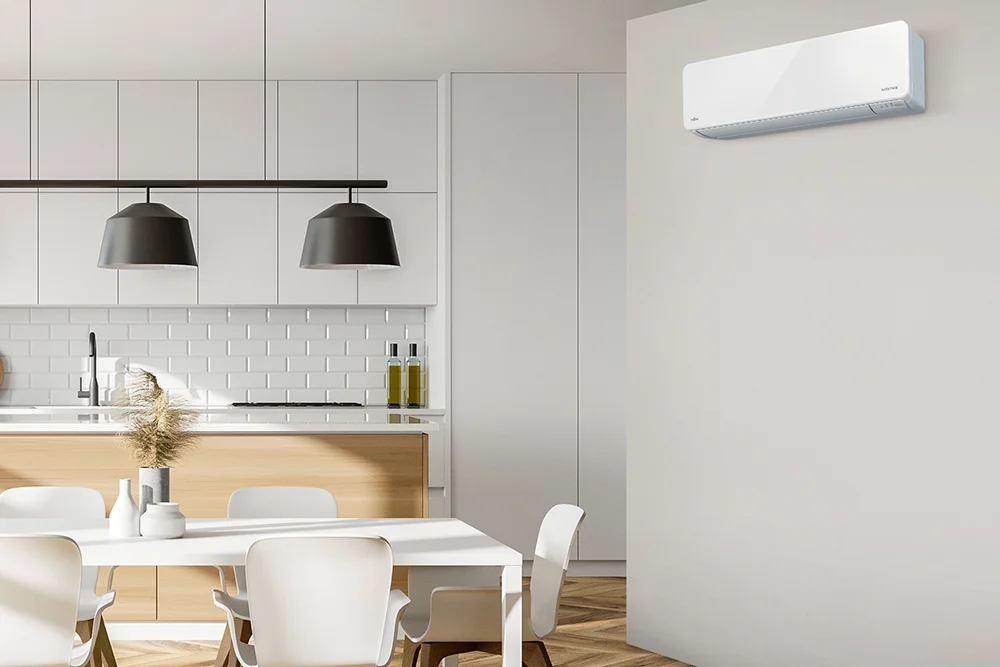
A Fujitsu Comfort Range heat pump on the wall in a modern kitchen/dining area.

What's the Best Air Conditioning System?

Or rather, what defines "the best" air conditioning system? Ultimately, the finest air conditioning system:

  • Makes everyday life easier
  • Is suitable for your space
  • Helps your money go further
  • Is low maintenance
  • Produces minimal noise levels

Choosing the right air conditioner can be overwhelming due to the many available options and features. But don't you worry! We're here to make the selection process a breeze. If unsure, leave it to the experts. We're happy to help!

Book a free on-site consultation

Let's dive into wall, multi-split, and portable AC systems so you can choose the best solution.

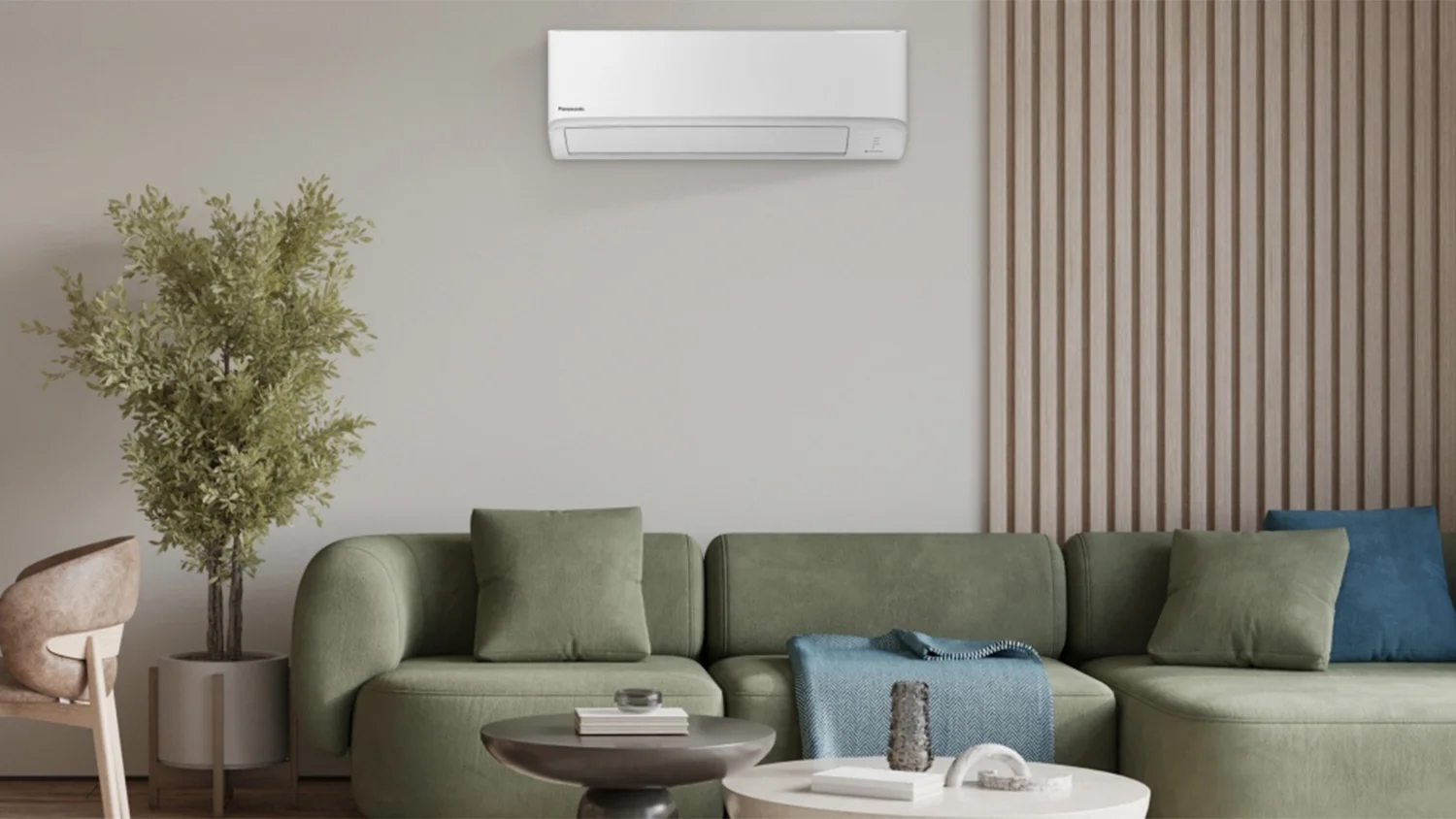
A Panasonic high wall Aero Series heat pump on the wall behind a green 3-seater modular couch in a modern living room.

High-Wall Heat Pumps

High-wall heat pumps are one of the most popular solutions. Mounted high on the wall, they provide broad airflow coverage, ideal for open-plan and living areas. They're energy-efficient, discreet, with smart features like app control and scheduling. Being high up keeps them out of the way of furniture and foot traffic, while ensuring optimal air circulation.

  • Heats, cools and keeps humidity in check
  • Smart-home ready (WiFi/app control)
  • Energy-efficient for both heating and cooling
  • Some models help improve indoor air quality
  • Produces minimal noise levels
  • Easy to maintain with washable filters and scheduled filter cleaning

Tip: Assess your wall space. You might need to rearrange any wall hangings or decor to create room for a high wall.

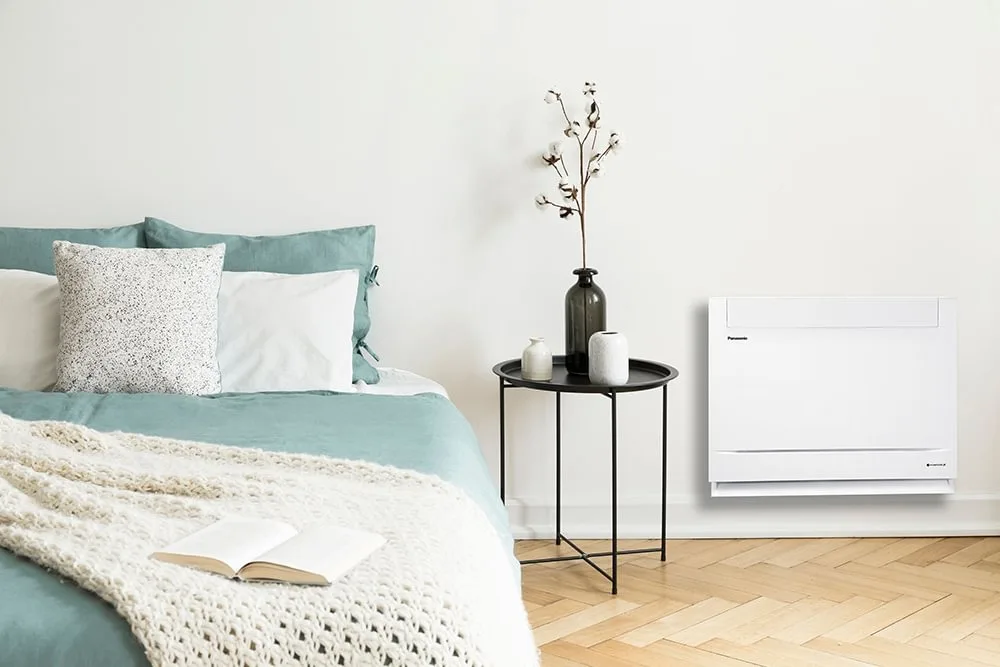
A Panasonic floor console installed on the wall of a bedroom at ground level, on the left is a simple bedside table with some ornaments.

Floor Consoles

Floor consoles are a fantastic choice for homes with limited wall space or those looking to replace old fireplaces. Installed at ground level, they deliver steady airflow from the ground up, which is how heat naturally spreads throughout a space. They are also easier to service, with front-facing filters and controls you can easily access without needing a ladder.

Key Benefits:
  • Heats, cools and keeps humidity in check
  • Helps improve air quality indoors
  • Smart-home ready (WiFi/app control)
  • Quiet operation - Quiet mode lowers operation noise even further to just 19dB,*
  • Mounting options include exposed floor, exposed wall, semi-recessed and recessed mounting
  • Easy access for cleaning and servicing

Tip: Assess the floor space along the walls; you might need to move some furniture around.

*The Panasonic CS-Z25UFRAW & CS-Z35UFRAW models on quiet mode with low fan speed during heating operation.

A bird's eye view 3D floor plan showing how a multi-room heat pump system may be connected in a home.

Multi-Split Systems

Multi-split systems are perfect for larger households or homes where different rooms need individual temperature control. Connect up to 6 indoor units to a single outdoor unit, keeping the exterior of your home tidy while delivering zoned comfort throughout.

You can control each unit independently, which is ideal for families with different temperature preferences. You'll be spoiled for indoor unit choices, with multiple options including high wall, floor consoles and cassettes.

Tip: Assess your wall space. You might need to rearrange any wall hangings or decor to create room for a high wall.

Key Benefits:
  • Heat or cool multiple rooms with one outdoor unit
  • Independent control per zone
  • 5-in-1 climate control
  • Helps improve air quality indoors
  • Efficient for large homes or multi-level dwellings
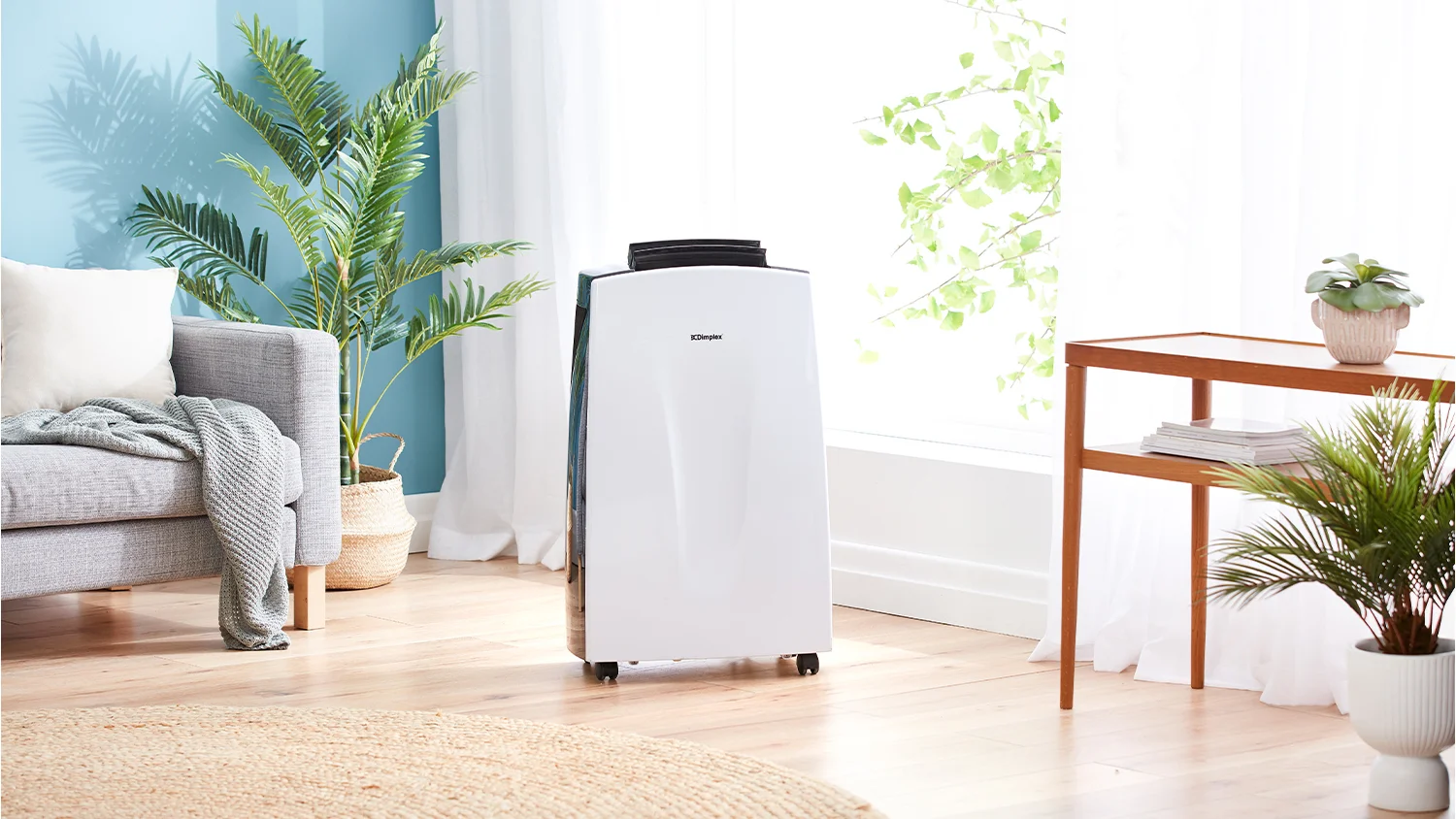
The Dimplex portable air conditioner and dehumidifier running next to a big window in a bright living room.

Portable Consoles

Portable air conditioners are the go-to for anyone who needs cooling or dehumidifying without permanent installation. These mobile units plug into a standard power outlet, and some include a window venting kit. Portable units are flexible and the easiest "out-of-the-box" air conditioning systems.

Key Benefits:
  • Primarily cools and dehumidifies; some models provide heating.*
  • Plug-and-play — no install required
  • Move between rooms as needed
  • Excellent support during heatwaves and for rooms needing extra moisture control
  • Easy cleaning with hand-washable filters

Tip: Consider the proximity to windows for external venting.

*The Olimpia Splendid Air Pro 14 and Dimplex Heat Pump Air Conditioner & Dehumidifier provide heating.

From Floor to Wall: Side-by-side Comparison of Heat Pump & AC Options

System type Space requirements Spatial considerations Certified installer needed
High-wall Wall space Wall arrangements, windows Yes
Floor console Floor space Floor space, lower half of the wall, and recessed areas Yes
Multi-split Wall or floor space Wall or floor space, depending on room requirements Yes
Portable console Floor space Some require proximity to a window for the exhaust pipe No

Are you moving away from an old log burner or gas heater?

You can give up the old, dusty fireplace and wave goodbye to the hassle of carrying around heavy wood and cleaning up the mess on the floor! With a heat pump air conditioner, you don't have to worry about buying or storing wood or gas cylinders either!

Not enough wall space? A floor console might work best for your home.

Why Choose an Energy-Efficient Heat Pump Air Conditioner?

Setting aside money savings, choosing an energy-efficient appliance is another step towards clean energy and showing care for our planet. Thanks to the latest advancements in air conditioning technology, you can save on your power bill while being more environmentally friendly.

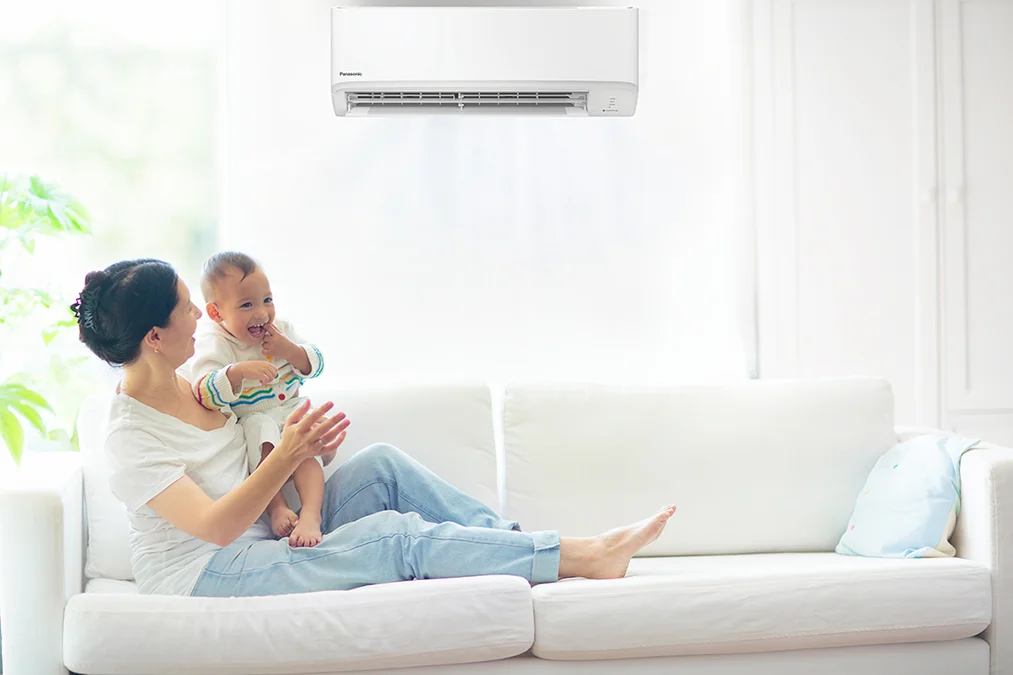
Happy mum and baby relaxing on the couch with a Panasonic heat pump running in the background.

Reduce your power bills and environmental impact

According to Gen Less, a 3-person household could save up to $268 per year in heating costs with a heat pump compared to running a wood burner for 3-4 days a week in a poorly insulated home1.

How are heat pumps more energy-efficient?

Besides consuming less energy to produce heat than other options, our air conditioners are 100% electric and draw from the national energy grid, which is 80-85% supplied by clean energy sources like hydro and wind.

1 This is using the Gen Less running costs savings calculator. Figures reflect energy use only and don't include daily connection charges.

Happy mum and baby relaxing on the couch with a Panasonic heat pump running in the background.

Air Conditioners are more affordable than ever

Green loans and Government Grants

For some, the upfront cost may deter. Thankfully, most New Zealand banks offer green loans with low interest rates to help make homes more energy efficient.

Financing options and loan criteria vary from bank to bank, so it's worth checking directly with your bank. Harvey Norman also offers great interest-free deals and payment options.

Have you heard of Warmer Kiwi Homes?

Homes eligible for the Warmer Kiwi Homes Grant can enjoy a warmer, healthier home while saving on their power bill!

The Warmer Kiwi Homes programme offers eligible homeowners up to 80% off the cost of an approved efficient heater for their main living area. You can check here if you're eligible.

Our team will work with a registered provider.

Visit us in-store at your nearest Harvey Norman store, or enquire about Warmer Kiwi Homes during your heat pump consultation.

Check the Air Conditioner's Energy Rating Label

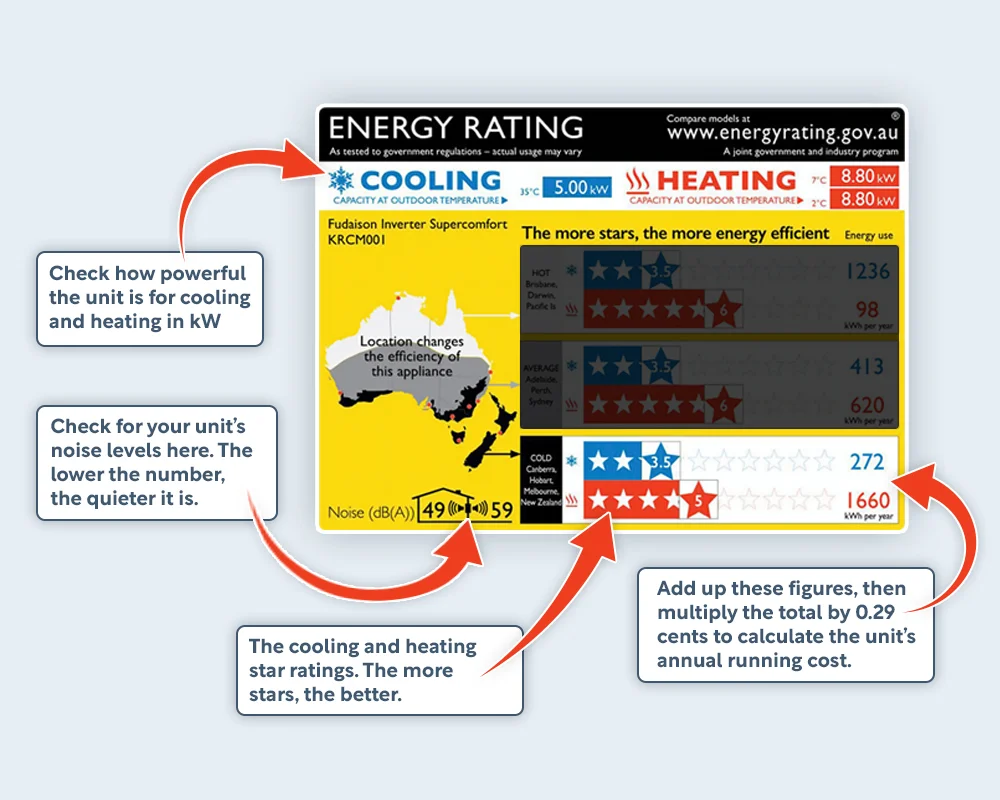
The Zoned Energy Rating Label (ZERL) diagram with arrows pointing to specific areas on the label

The ZERL (Zoned Energy Rating Label)

You can check the ZERL (Zoned Energy Rating Label) to assess your heat pump's performance and compatibility. Spot these labels on the product in-store on the display model. The label indicates how heat pumps perform across New Zealand and Australia's climate zones. Note that all of New Zealand falls within the 'cold' zone.

Tip: You can ignore the first two climate zones with the stars (hot and cold) above them on the label, as those pertain to Australia.

Calculate how much your heatpump costs to run each year in kilowatt-hours(kWh):

Find the heating and cooling figures (blue and red on the ZERL, to the right of the stars) and multiply by 0.29 cents (the national average cost per kWh, according to MBIE) for an estimated annual cost. Using the diagram as a guide, the calculation is: (272 + 1660) x 0.29 = $560.28 per year. It's a good idea to check your monthly bill for the actual costs from your electricity provider.

What's Helpful on the ZERL

Check the unit's cooling and heating capacity in Kilowatts (kW).

The unit's cooling output in kW is shown at an outdoor temp of 35°C, and heating output at two outdoor temperatures: 7°C and 2°C.

This helps determine if the unit is suitable for the room size. No worries, a specialised installer can sort this out and provide an accurate assessment.

Find the unit's brand and model number.

This is in the top left-hand corner of the label on the yellow background, just below the cooling and heating capacity band.

Cooling and heating star ratings range from 0 to 10.

The star ratings for cooling and heating (including half-stars) are displayed alongside the energy consumption figures next to the stars on the right.

Blue stars represent cooling energy usage, while red stars indicate heating, measured in kilowatt-hours (kWh) per year. The more stars, the better, signifying better energy efficiency. In contrast, a lower kWh figure means lower running costs.

Tip: Seek more stars and lower kWh figures.

Check your unit's noise levels while running.

Indoor and outdoor noise levels are presented in (dB(A)) 'A-weighted' decibels, with a house diagram on the right.

Indoor noise figures are inside the house, while outdoor noise figures are outside. 'A-weighted' decibels reflect human ear sensitivity.

Tip: The lower the number, the quieter it is.

The old Energy Rating label (ERL)

Tip: When searching for a heat pump, you may encounter the old energy rating label and be tempted to compare units. Heat pumps imported before July 1, 2021, display the old (ERL) label, indicating older models.

ZERL and ERL are different rating systems with distinct calculations; ZERL is more comprehensive, and older ratings did not consider typical electricity use or climate impacts. Compare similar items for accuracy.

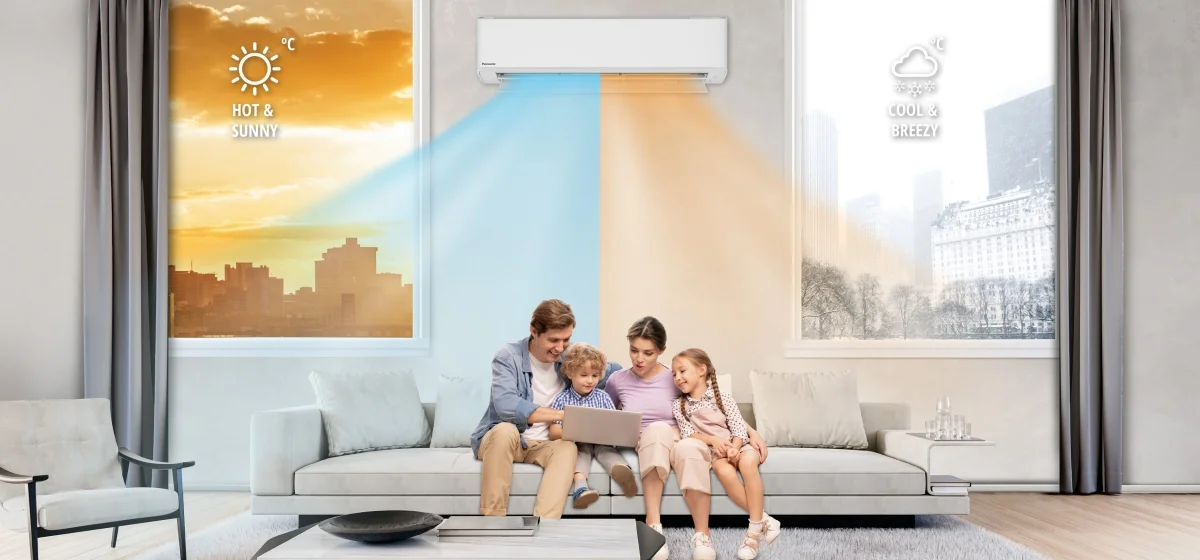
A family of 4 relaxing in the lounge with a Panasonic high wall heat pump running behind them. The cooling and heating airflows are shown in blue and orange.

What Affects Real-World Efficiency?

Keep in mind that running costs and actual energy use depend on many factors:

  • Correct system size
  • Placement near windows/doors
  • Move between rooms as needed
  • Existing insulation and window glazing
  • Outdoor/indoor temps
  • Usage habits (intermittent vs constant)
  • Humidity levels

Even a 4-star unit can let you down if it's not installed right! That's why it's essential to have a qualified electrician or installer assess and install your system. We collaborate with certified electricians and specialised installers to ensure everything goes smoothly.

Must-Have Heat Pump and Air Conditioning Features

Today's heat pumps and cooling systems bring much more than temperature control.

You'll want to explore these technologies if you value convenience, air quality, or automation. Modern systems truly enhance your experience beyond mere temperature control. Here are features that provide excellent value for your investment:

Inverter Technology

Achieve a comfortable indoor climate! Inverter heat pumps and air conditioners use less energy to maintain a set temperature, reducing electricity bills. Inverter technology adjusts the compressor's speed to sustain temperature, unlike traditional non-inverter pumps that turn the compressor on and off, consuming more power.

Quiet Modes

Keep a more peaceful and comfortable space. The compressor and fan speeds are reduced to create less noise. You can enjoy uninterrupted sleep and wake up refreshed.

Economy Modes

Save power whether heating, cooling, or dehumidifying with a button press or a voice command. The Panasonic Aero Z Series ECO (AI) Mode can maximise energy savings by learning and judging the optimal ECO level.

WiFi, Cloud App, & Smart Control

Control the temperature and schedule from anywhere. Use your smartphone to manage your system - whether at work, on your way home, or in bed. The Panasonic Aero Series connects to various voice assistants, allowing you to adjust your heat pump's settings with a voice command. The Fujitsu Lifestyle range features multiple timer options so you can automate comfort!

Air Purification

If you're concerned about air quality, the latest tech offers built-in air filtration systems that actively remove allergens, odours, and particles. This is especially important for households with asthma, hay fever, or pets.

  • Panasonic's nanoe™ X works wonders by inhibiting various bacteria, viruses, mould, allergens, pollen, and hazardous substances. This technology helps create a fresher and healthier environment just for you.
  • Fujitsu Apple-Catechin filters harness the power of static electricity to effectively absorb and filter out allergens, keeping your environment clean and fresh.
Sensitive Choice logo
Sensitive choice

Panasonic's nanoe X and Fujitsu's Apple Catechin filters are approved by the National Asthma Council Australia's Sensitive Choice programme, making them ideal for allergy-prone households.

Clean air comfort

Cleaner air, better sleep, and fewer allergens are great reasons to choose a filter-equipped system. If indoor air quality is a priority, these features can make a real difference in everyday comfort.

A family of 4 relaxing in the lounge with a Panasonic high wall heat pump running behind them. The cooling and heating airflows are shown in blue and orange.

Installing Your Heat Pump - We Can Help!

Getting the right heat pump for your home is only half the job—a professional installation is just as important. That's why we team up with certified electricians and heat pump installers. Whether you know exactly what you want or need a little expert advice, we'll make the process simple and hassle-free.

Free in-home heat pump consultation

Fill in the form to book your free consultation

Got your eye on a specific model?

Great! You can easily buy it online, and we'll call you to discuss the installation if you need it.

Still deciding?

No worries, you can chat to one of our friendly team members in-store, or we can arrange the free on-site consultation where an expert can:

  • Conduct a site inspection to evaluate your space requirements. This includes measuring the area, assessing room orientation, examining insulation, and identifying potential installation challenges. They can then recommend the most suitable system.
  • They may also discuss heat pump maintenance and ways to extend the lifespan of your heat pump.
  • Finally, they can provide a more accurate quote for installation costs and any additional services.

Pricing varies by store and location, as we work with local professionals.

Using your installer?

Feel free to take care of the installation yourself. We're happy to supply the unit; your installer will quote and invoice directly.

Reputable Brands

We partner with trusted air conditioning brands that provide reliable heating and cooling solutions.

We would love to assist you in finding the perfect air conditioner for your home.

Air Conditioning FAQs

Refer to 'real world efficiency' above, which discusses factors affecting an air conditioner's electricity consumption. The ZERL labels can determine the unit's yearly running cost.

On the ZERL for the 'cold' climate zone, which New Zealand falls under, look for the unit's 'kWh per year' figures to the right of the cooling and heating star ratings, and calculate the heat pump's power consumption per year in kWh.

Add the cooling and heating figures (in blue and red), then multiply the total by 0.29 cents (29¢ is the national average cost of a kWh as reported by MBIE) to determine the unit's annual running cost.

Please confirm your selection

Store Picker

Travel Mode

Stores